
Intro / Project description
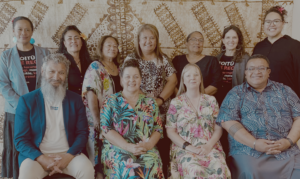
Despite decades of international research that clearly demonstrate the advantages of Bilingual/Immersion Education, Pacific tamariki still have limited opportunities for learning in their heritage languages at school. In Tāmaki Makaurau and increasingly in the regions, it is imperative to sustain bilingual/biliterate futures for Pacific tamariki and whānau, where their Pacific identities and cultural ways of being are central to notions of success. This research project is a partnership between Vaʻatele Education Consulting, AUT, and three primary schools with established Pacific Bilingual/Immersion Education (PBIE) units to understand how schools enact, sustain, and strengthen PBIE pedagogical leadership and practice, to enhance Pacific success.
Aims
The research study explicitly addresses the gap in Pacific Bilingual and Immersion Education (PBIE) research in Aotearoa NZ for the purpose of enhancing Pacific achievement outcomes. The project aims to explore the research question: How do/can schools enact, sustain, and strengthen Pacific Bilingual/Immersion Education (PBIE) to enhance learning outcomes and Pacific notions of success for tamariki and whānau? The research study encompasses a collective co-design approach that privileges and supports tamariki, whānau, teachers, and leaders of PBIE units as expert knowledge holders to share their everyday learning, engagement, pedagogical, and leadership experiences. It is important to provide space for schools to develop, implement, and revise their PBIE strategic goals, curriculum, and pedagogical approaches to enact, sustain, and strengthen their PBIE provision. The research study privileges Pacific research methods to highlight each school’s unique PBIE journey and to include the contributions of tamariki and whānau.
Why is this research important?
Despite empirical evidence from decades of international research in Bilingual Education documenting positive achievement outcomes (Ramirez et al., 1991; Thomas & Collier, 1997, 2002, 2012), there are still limited opportunities for bilingual learners in Aotearoa NZ to learn in their Indigenous and heritage languages. The importance of early and sustained language and literacy development in the heritage language is essential to realising the benefits of bilingualism, including multiple cognitive and communicative advantages (Fox et al., 2019). The enactment of evidence-based Bilingual and Immersion Education approaches in bilingual classrooms is necessary to address the differential patterns of educational achievement experienced by Māori, Pacific, and other bilingual learners (May, 2020).
What we plan to do
We met with partner schools in co-design meetings on 11th of February, and the 4th and 24th of March 2026. Partner schools offered suggestions for the wording of the research questions and approaches to take for the video-recorded lessons, group talanoa, and family fono, as well as the development of data collection tools. Based on these co-design meetings, we plan to do the following:
- beginning and end of project group talanoa with leaders
- beginning and end of project group talanoa with teachers
- one family fono per school (talanoa groups for tamariki and whānau)
- select video-recorded PBIE small group lessons to document PBIE exemplars
- follow up group talanoa will give teachers an opportunity to reflect on the lesson and share their expertise
- document analysis of school strategic and bilingual unit plans, and other relevant school policy/initiatives
- pre and post self-review of PBIE provision
- assessment results at the end of PBIE year 6 and year 8, and attendance records of PBIE units across all year levels